Light, Space, and the Architecture of Day
Practical material on window placement, light shafts, and daylight factor calculations for residential buildings across Poland.


Context
Poland's Lighting Climate
Poland receives between 1,500 and 1,800 hours of sunshine annually, depending on the region. The country's position at 49–54°N latitude means that solar altitude shifts considerably between summer and winter — a factor that directly affects how much daylight reaches interior spaces.
In urban areas, particularly in Mazovia, Silesia, and Łódź, multi-storey construction reduces available daylight for lower floors. Polish building regulations (Rozporządzenie Ministra Infrastruktury z dnia 12 kwietnia 2002 r.) specify minimum daylight factor requirements that must be met in habitable rooms.
Articles
Topics Covered
Three subject areas covering window design, vertical light shafts, and the calculation of daylight availability in enclosed floor plans.

Window Design
Window Placement in Polish Residential Buildings
How facade orientation, glazing ratio, and room depth interact to determine natural light distribution in Polish homes.
Read article →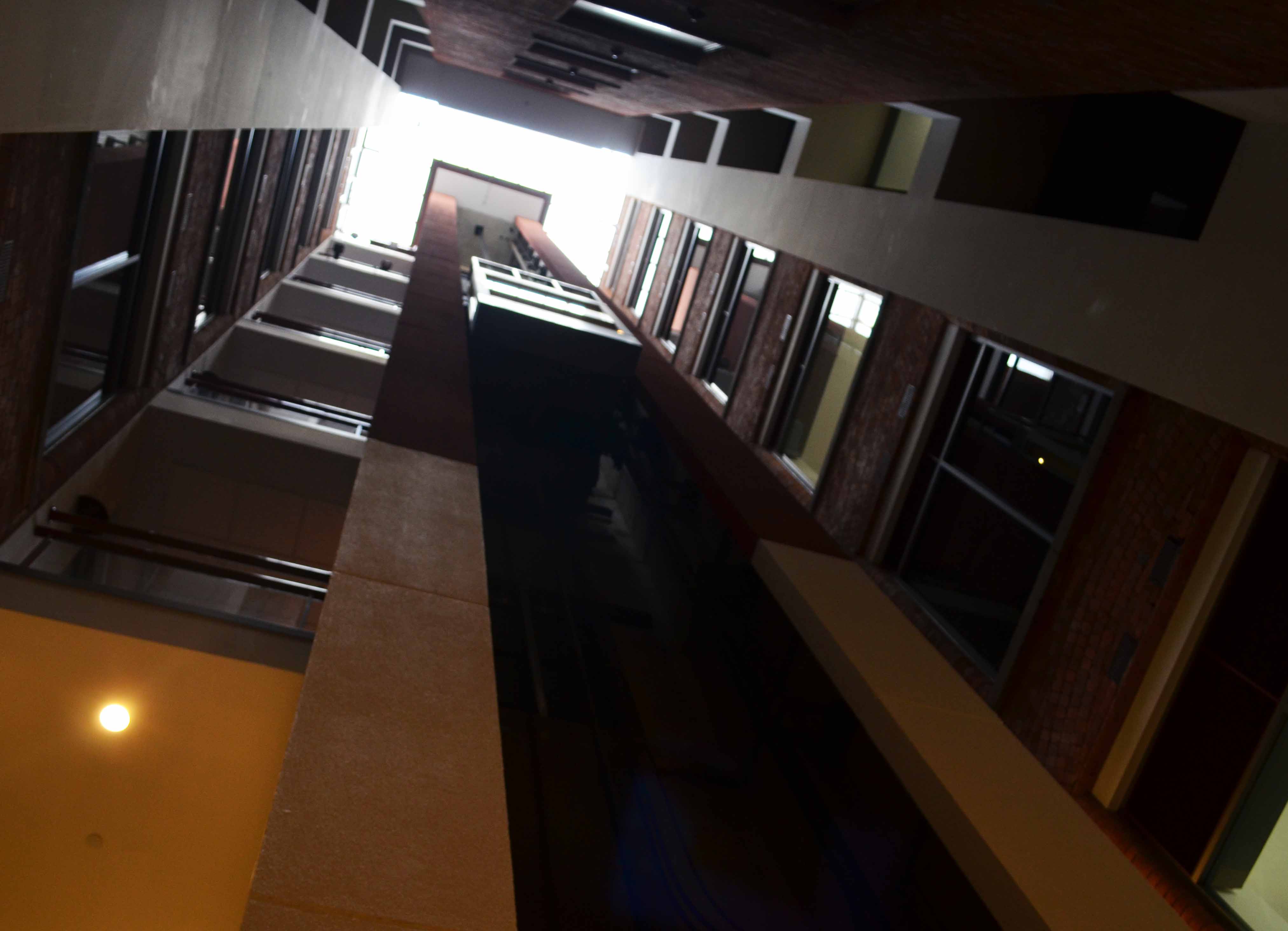
Light Wells
Light Wells in Multi-Storey Housing: Design and Dimensions
The geometry of vertical light shafts, their minimum proportions under Polish code, and how they affect lower-floor apartments.
Read article →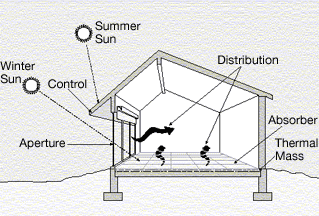
Daylight Calculations
Calculating Daylight Factor in Enclosed Floor Plans
A step-by-step explanation of the daylight factor method, with reference values from EN 17037 and Polish regulatory requirements.
Read article →Key Considerations
Factors Affecting Daylighting
Natural light in a residence depends on a combination of architectural, geographic, and regulatory variables.
Window-to-Floor Ratio
Polish technical regulations specify that habitable rooms must have a minimum window area relative to floor area. This ratio varies by room type and building category.
Solar Altitude at Latitude
At 52°N (Warsaw), the sun reaches a maximum altitude of around 61° in June and drops to approximately 14° in December. Overhangs and setbacks must account for this range.
Obstruction Angle
Adjacent buildings, trees, and terrain features reduce the sky component reaching windows. The obstruction angle is a key input in daylight factor calculations.
Room Depth and Reflectance
Daylight diminishes rapidly with distance from the window. Internal surface reflectance — ceiling, walls, floor — significantly influences how far light penetrates into a room.
Glazing Transmittance
Modern double and triple glazing reduces light transmission relative to single glass. Energy-efficient coatings (low-e) affect visible light transmittance (VLT) values.
Orientation and Facade Design
South-facing rooms in Poland receive the most direct sun in winter. East and west orientations provide morning and afternoon light respectively, with lower winter sun angles.

Standards
Regulatory Framework in Poland
The primary document governing daylighting in Polish residential construction is Rozporządzenie Ministra Infrastruktury z dnia 12 kwietnia 2002 r. w sprawie warunków technicznych, jakim powinny odpowiadać budynki i ich usytuowanie (WT 2002, with subsequent amendments through 2022).
In addition, the European standard EN 17037:2018 "Daylight in buildings" provides a harmonised method for assessing daylight availability, daylight illuminance, and view out. Polish designers increasingly reference EN 17037 alongside national requirements.
- Minimum daylight factor for living rooms: typically 0.5–1% depending on room use
- Window-to-floor area ratio: minimum 1:8 in habitable rooms
- Light well minimum width-to-height ratio: specified in §60 of WT